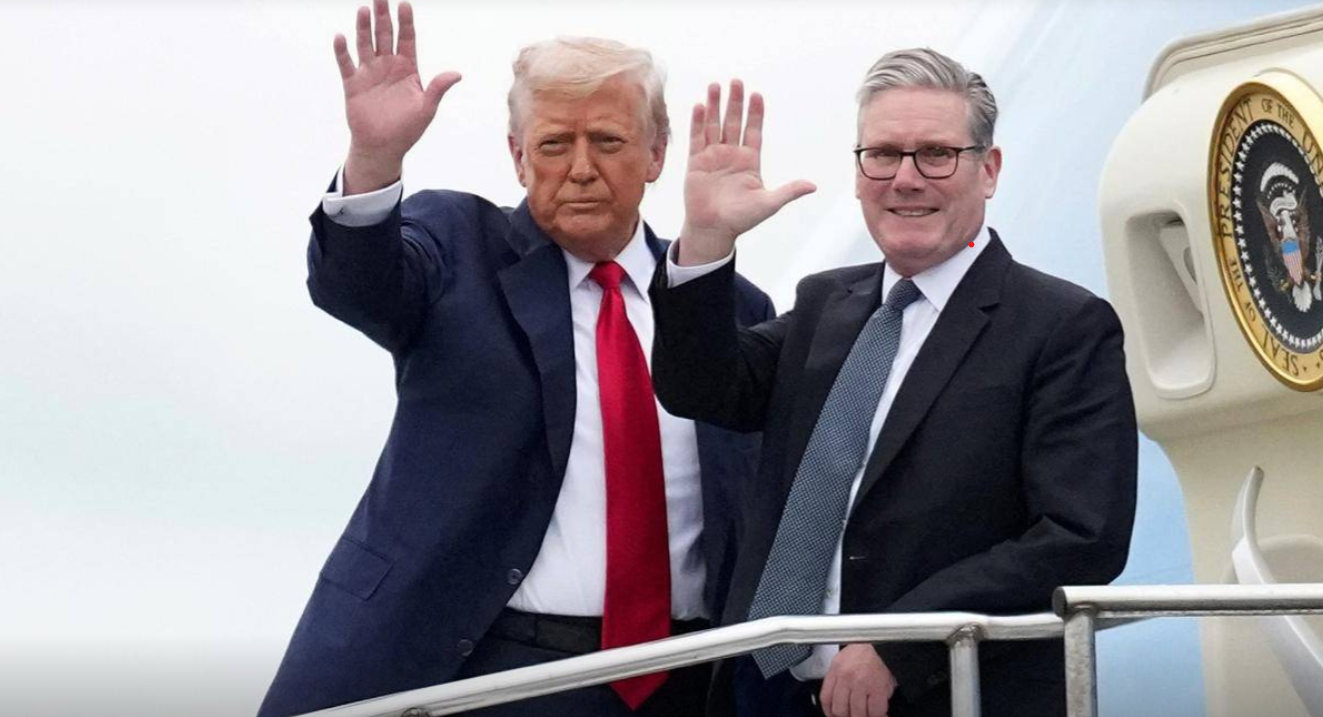
President Trump lands in London on 16 September for his second state visit, the first time in UK history a foreign leader has been accorded this honour twice.
A UK state visit – consisting of a formal invitation from the monarch to a foreign head of state – are relatively rare events. Over the past two decades, the UK has hosted only one to two such visits annually. Carefully choreographed affairs that seek to showcase the depth of a relationship, they’re a culmination of months, if not years, of coordination between capitals.
Much like the 2019 visit, the three days will be filled with ceremony, symbol, and protests. It may also be more substantive this time around, showcasing the robust technology and economic agenda the two leaders have shaped in recent months. But major diplomatic breakthroughs, on Gaza or Ukraine, likely remain beyond reach.
Advancing an affirmative US–UK Tech agenda
A landmark US–UK tech partnership is rumoured as the major visit deliverable, offering a common approach to AI, quantum computing, and rare earth minerals. Nvidia’s Jensen Huang, OpenAI’s Sam Altman, and Apple’s Tim Cook may join for the launch. Given the UK’s strong research institutions, skilled tech workforce, and burgeoning AI startup ecosystem, it’s a natural partnership for the US, which sees AI primacy as a major geostrategic strength.
Investments in UK datacenters and defence sector collaboration may follow, measures aimed to secure supply chains and limit China’s control over the minerals fuelling the AI revolution. An agreement on nuclear power generation, bringing new investments and advanced modular reactors online, aims to power AI datacenters and, according to Starmer, ‘drive down household bills in the long run’.
This agenda may address some of the hardware and research inputs. But it will not easily resolve the range of regulatory and content differences across the Atlantic. London may reportedly agree to language emphasizing the importance of free speech, an area of bilateral friction sparked by the UK’s Online Safety Act.
It remains to be seen whether this partnership can truly supercharge transatlantic cooperation on AI – or whether its strength lies in its signalling.