Despite the historic change in stance, the UK’s move will not change Prime Minister Netanyahu’s mind. Keir Starmer may soon face more domestic pressure to explore other forms of leverage.
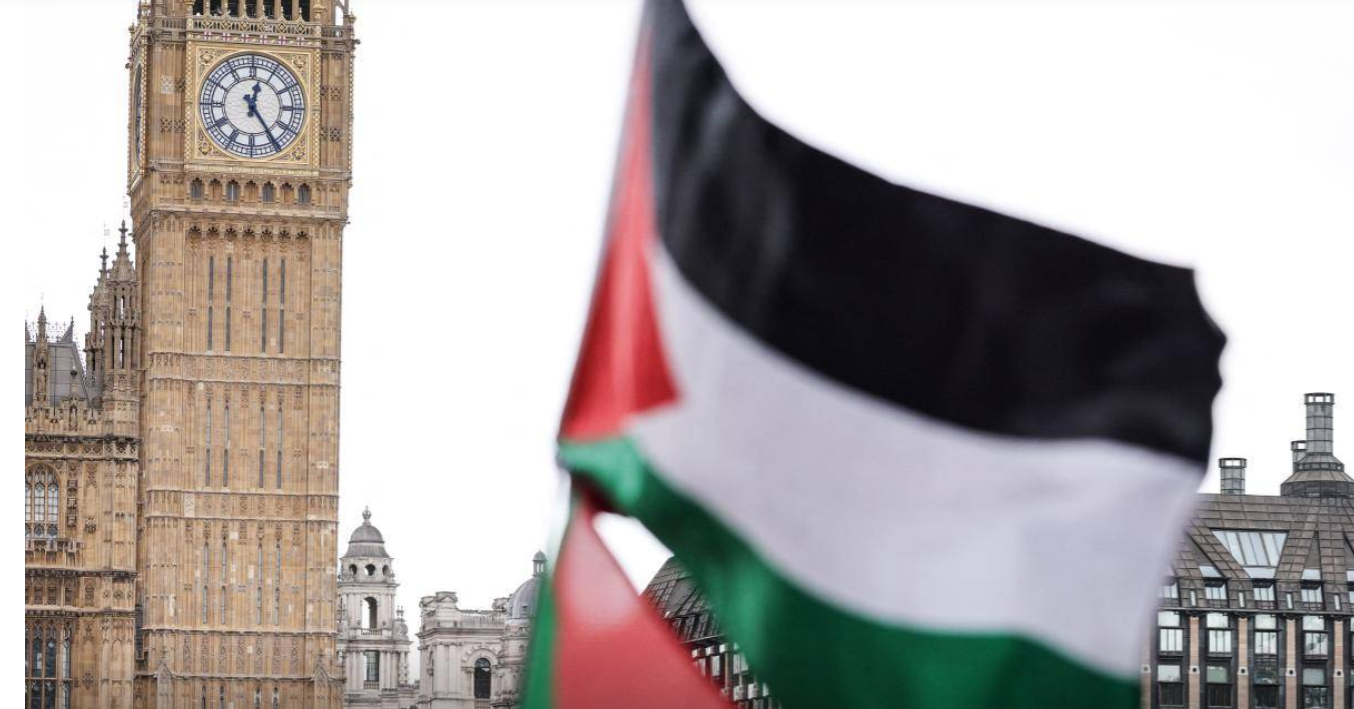
On Sunday afternoon UK Prime Minister Keir Starmer announced that Britain would formally recognize the state of Palestine. A day later the red, white, green and black flag was ceremonially raised over the Palestine Mission in Hammersmith to an applauding crowd. London has gained a new embassy and a British ambassador will head to the West Bank. But will Starmer’s declaration make any difference to prospects for a ceasefire in Gaza, or a two-state solution?
Critics of Starmer say no. UK Conservative Party leader Kemi Badenoch declared it was ‘absolutely disastrous’ and ‘rewarding terrorism with no conditions whatsoever put in place for Hamas’, emphasizing that it would neither free Israel’s hostages nor stop the suffering in Gaza.
From the other side, some pro-Palestinian voices charge that recognition is too little too late. An unnamed Labour MP told the BBC that London was ‘behind the curve’, given over three quarters of UN members had already recognized Palestine.
Simon Opher, a doctor and Labour MP who was recently denied entry to the West Bank, said the government needed to pressure Israel by opting out of arms deals and exploring trade sanctions – something many have been calling for since the Gaza conflict began.
Starmer insisted that the goal was ‘to revive the hope of peace and a two-state solution’. Yet the UK has been committed to a two-state solution since the 1990s. Previously its position has been to withhold recognizing Palestine until the conclusion of a successful peace process.
It has apparently abandoned that stance because of the belated realization that the two-state solution is being destroyed by conflict in Gaza and aggressive settlement building by Israel in the West Bank.
Pressure on Israel
Some in government believe this symbolic act will offer hope to desperate Palestinians. But the more hard-headed know it is primarily designed to pressure Israel. Starmer acknowledged as much in July, when he demanded that Israeli Prime Minister Benjamin Netanyahu fulfil an unlikely list of conditions, including a Gaza ceasefire and committing to a two-state solution, to avoid UK recognition of Palestine.
If Starmer’s goal was to use recognition as leverage, it evidently has not worked. The threat of recognition did not prevent Israel from re-invading Gaza City and launching an attack on Hamas’s negotiating team in Qatar. And, following Sunday’s announcement, Netanyahu has only responded with a pledge that a two-state solution ‘will not happen’.
This is a familiar story. The Labour government has incrementally increased its criticism of Israel over the past year, ending some arms licenses, cancelling trade talks and sanctioning two far right ministers. None of this had any effect. The approach reflects both Starmer’s caution and the UK’s limited influence.
As Opher noted, there are sharper tools in Britain’s arsenal, including sanctions. The UK could also cut all arm sales. Only 30 of 350 arms export licenses were revoked, and London continues to supply components for Israel’s F-35 jets.